- +91 63054 35011
- info@medtx.in/operations@medtx.in
- HYD, TS

TAVR Surgery
Transcatheter Aortic Valve Replacement (TAVR) is a minimally invasive procedure to replace a narrowed aortic valve (aortic stenosis) without open-heart surgery. It involves inserting a new valve through a catheter, typically via the femoral artery, and positioning it within the damaged valve. TAVR is performed under local or general anesthesia and is ideal for high-risk or older patients. Recovery is quicker compared to traditional surgery, with most patients resuming activities within days. The procedure improves blood flow, relieves symptoms, and enhances heart function.

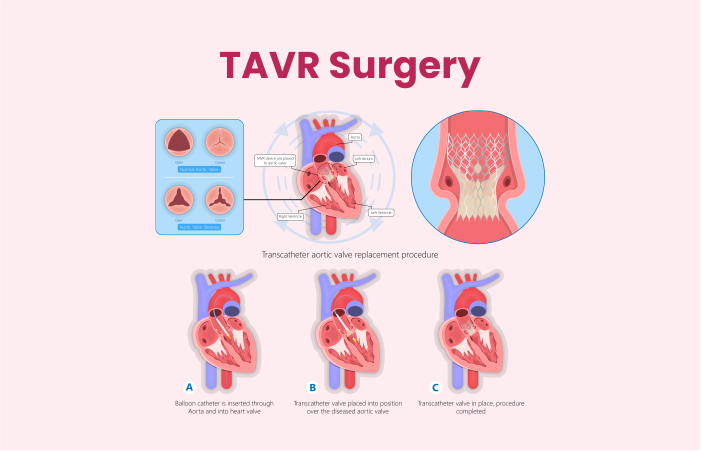
Transcatheter Aortic Valve Replacement Surgery
Welcome to MedTX Hospitals, Hyderabad’s top Transcatheter Aortic Valve Replacement (TAVR) operation center. We are committed to delivering excellent cardiac care and advanced treatment options for people with heart valve issues. Our expert specialists specialize in TAVR operations, including the highly sought-after Transcatheter Aortic Valve Implantation (TAVI). In this article, we will explain the goal of TAVR surgery, why it is conducted, how to prepare for the procedure, and the risks of postponing Transcatheter Aortic Valve Replacement Surgery.
What is Transcatheter Aortic Valve Replacement Surgery?
Transcatheter Aortic Valve Replacement (TAVR) surgery is a minimally invasive treatment for treating aortic valve stenosis. During the procedure, a damaged or narrowed aortic valve is replaced with a prosthetic valve using catheter-based methods. This novel procedure eliminates the need for standard open-heart surgery, which leads to speedier recovery periods and lower risks.
Why is Transcatheter Aortic Valve Replacement
Surgery Performed?
Transcatheter Aortic Valve Replacement Surgery is used to improve the function of a damaged or narrowed aortic valve. It is especially useful for individuals who are deemed high-risk or ineligible for standard open-heart surgery. TAVR is a realistic therapy option that relieves symptoms, improves quality of life, and increases survival rates.
How to Prepare for Transcatheter Aortic Valve
Replacement Surgery?
There are several important steps to take before TAVR surgery. Your healthcare team at MedTX Hospitals will walk you through the procedure, guaranteeing a smooth and successful outcome. Here are a few broad recommendations to help you prepare:
- Consultation: Schedule a consultation with our TAVR experts. They will assess your condition, conduct any necessary tests, and explain the procedure’s benefits, dangers, and expected outcomes.
- Medical Evaluation: Have a thorough medical examination to examine your overall health and detect any underlying issues that may impair the surgery or healing process.
- Preoperative Instructions: Follow the pre-operative instructions given by your healthcare team, which may include fasting before surgery, discontinuing certain medications, and making arrangements for transportation to and from the hospital.
- Lifestyle Changes: To improve your general health before surgery, your doctor may prescribe that you quit smoking, eat a balanced diet, and exercise regularly.
More About Transcatheter Aortic Valve Replacement
Surgery at MedTX Hospitals
At MedTX Hospitals, we are happy to provide cutting-edge facilities and a highly qualified medical team specializing in TAVR. Our commitment to excellence guarantees that you receive the best possible care throughout your treatment journey. To get the best possible results for our patients, we use cutting-edge medical technology and follow strict safety measures.
Consequences of Delaying Transcatheter Aortic Valve
Replacement Surgery
Delaying TAVR surgery can have major repercussions since aortic valve stenosis worsens over time, resulting in symptoms including chest pain, shortness of breath, exhaustion, and even heart failure. It is critical to meet with our TAVR experts at MedTX Hospitals to evaluate your situation and identify the best time for surgery. Timely intervention can help you avoid further issues and enhance your overall cardiac health.
Choose MedTX Hospitals for Transcatheter Aortic Valve
Replacement Surgery
MedTX Hospitals is your reliable partner for Transcatheter Aortic Valve Replacement Surgery, ensuring superior care and successful outcomes. Our devoted team of cardiac doctors, cutting-edge technology, and patient-centered approach make us the ideal choice for TAVR surgery in Hyderabad.
Contact us today to set up a consultation and take the first step toward improving your cardiac health. Our team will give you the customized attention and complete care you need, resulting in a smooth and effective TAVR procedure. Experience MedTX Hospitals’ brilliance in Transcatheter Aortic Valve Replacement Surgery.
Frequently Asked Questions (FAQs)
TAVR is a minimally invasive surgical treatment used to treat aortic valve stenosis, a condition that causes the aortic valve to constrict and impede blood flow from the heart. Instead of open-heart surgery, TAVR involves inserting a new valve using a catheter, usually through a blood artery in the leg.
TAVR is frequently indicated for patients with severe aortic valve stenosis who are deemed high-risk or ineligible for standard open-heart surgery due to age, medical problems, or other criteria. Individual medical examinations determine whether or not a patient is suitable for TAVR.
TAVR involves inserting a catheter with a deflated replacement valve into a blood vessel, usually through the femoral artery in the leg. The catheter is guided to the heart and inserted into the damaged aortic valve. The new valve is then enlarged, pushing aside the old one and restoring normal blood flow.
Because of its minimally invasive nature, TAVR is widely regarded as a safer alternative for individuals who are not suitable candidates for open-heart surgery. However, the decision between TAVR and surgery is based on the patient's specific health state and risk considerations.
TAVR has shorter recovery durations, smaller incisions, a lower risk of complications, and a faster return to normal activities than traditional open-heart surgery.