- +91 63054 35011
- info@medtx.in/operations@medtx.in
- HYD, TS

Ureteroscopy Surgery
Ureteroscopy surgery is a minimally invasive procedure to diagnose or treat problems in the ureters or kidneys, such as kidney stones or strictures. It involves inserting a thin, flexible scope through the urethra and bladder into the ureter to remove stones, biopsy tissue, or clear blockages. The procedure is typically performed under general or spinal anesthesia. Recovery is quick, with most patients resuming normal activities within a few days. Ureteroscopy is highly effective in treating urinary tract conditions and restoring normal function.

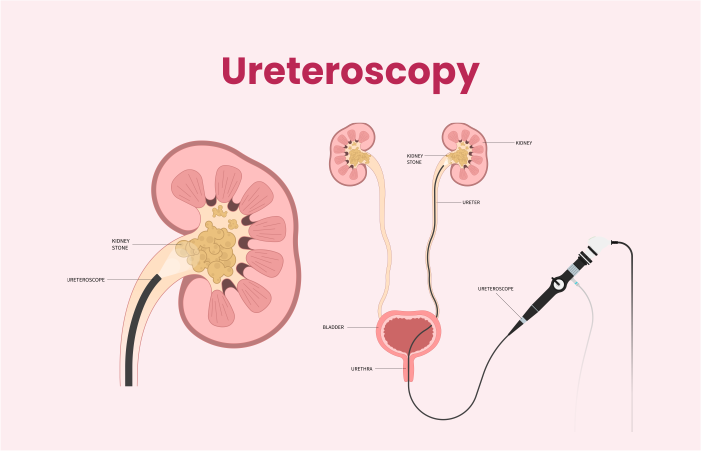
Ureteroscopy Surgery
Ureteroscopy surgery is a minimally invasive treatment used to diagnose and treat urinary tract diseases, particularly those involving the ureter and kidney. It makes use of a thin, flexible tube known as a ureteroscope, which is placed into the urethra and guided up into the ureter and kidney. The ureteroscope allows the urologist to see the urinary tract and execute different procedures, such as removing kidney stones, correcting ureteral strictures or blockages, and detecting and treating other urinary tract problems.
Why is Ureteroscopy Surgery Performed?
Ureteroscopy surgery is performed for a variety of purposes, including:
- Kidney stone removal is one of the principal aims of ureteroscopy. The treatment enables the urologist to detect and fragment the stones using specialist equipment, allowing them to pass or be completely removed.
- Treatment of ureteral strictures or blockages: Ureteroscopy can be performed to repair narrowings or blockages in the ureter, restoring normal urine flow.
- Diagnosis and treatment of urinary system abnormalities: Ureteroscopy allows the urologist to see the urinary tract and diagnose diseases like tumors, aberrant structures, and other abnormalities. In some circumstances, these anomalies can be addressed during the same surgery.
How to Prepare for Ureteroscopy Surgery?
To guarantee a safe and successful ureteroscopy operation, there are several steps to take. Here are some key parts of the preparatory process:
- Medical evaluation: Your urologist at TX Hospitals will perform a complete medical exam to examine your overall health and detect any pre-existing disorders that may affect the surgery. Blood tests, radiological scans, and consultations with other specialists may be required as part of this review.
- Medication changes: Tell your healthcare provider about any medications you’re currently taking, including prescriptions, over-the-counter meds, and supplements. They will advise you on which drugs to take or cease before the procedure.
- Fasting: You will most likely be asked to fast for a set period of time prior to surgery to ensure that your stomach is empty throughout the procedure. This lowers the chance of problems from anesthesia.
- Stool preparation: In some situations, your urologist may recommend a stool preparation routine to guarantee a clear viewing field throughout the treatment. This may include using laxatives or other prescribed drugs as directed.
- Anesthetic considerations: Your urologist will explain the type of anesthetic utilized during the surgery. Depending on the situation, ureteroscopy can be conducted under general anesthesia or local anesthetic with sedation.
More About Ureteroscopy Surgery at MedTX Hospitals
MedTX Hospitals takes pride in its highly skilled staff of urologists who specialize in ureteroscopy surgery. Our doctors have extensive experience performing a variety of urological treatments, and they are supported by a devoted team of healthcare experts. We prioritize patient safety and comfort by utilizing latest medical technologies and adhering to the highest standards of care.
Consequences of Delaying Ureteroscopy Surgery
Delaying ureteroscopy surgery has several consequences, including:
- Increased pain and discomfort: Kidney stones can cause excruciating agony and discomfort, and delaying surgery prolongs your suffering. Urinoscopy can help relieve discomfort and make stone removal easier.
- Stone advancement and problems: Kidney stones can expand in size over time, raising the risk of complications such urinary tract infections, kidney damage, or urinary tract obstruction. The likelihood of these problems is reduced when stones are removed promptly via ureteroscopy.
Delays in ureteroscopy surgery may limit your treatment options. As the stones develop or issues arise, more intrusive surgeries may be required, affecting your overall health and recuperation.
Frequently Asked Questions (FAQs)
To ensure a safe and successful ureteroscopy surgery, numerous steps must be taken before the procedure. This involves having a medical evaluation to examine your overall health, modifying medications as needed, fasting before surgery, and adhering to any specified bowel preparation program.
Your healthcare team will discuss with you the type of anesthesia used during ureteroscopy surgery. Depending on your situation, the treatment might be done under general anesthesia or local anesthetic with sedation.
TX Hospitals is the leading destination for urological care in Hyderabad, with a team of highly skilled urologists specializing in ureteroscopy procedures. They prioritize patient safety and comfort, utilizing advanced medical technologies and adhering to the highest standards of care.
Delaying ureteroscopy surgery may result in increased pain and suffering caused by kidney stones. It may also cause the progression of kidney stones and increase the risk of problems such as urinary tract infections, kidney damage, or urinary tract obstruction. Urinoscopy is a timely intervention that can prevent these disorders and provides more therapy alternatives.
Ureteroscopy is a minimally invasive treatment used to precisely remove kidney stones. Compared to more invasive surgical alternatives, ureteroscopy often has less downtime and a shorter recovery period.
The length of your hospital stay following ureteroscopy surgery will vary based on your individual instance and the complexity of the procedure. In some circumstances, patients can be discharged the same day, while others may need a brief hospital stay for observation and healing.
Recovery time following ureteroscopy surgery varies depending on individual characteristics. Many patients can resume regular activities within a few days to a week of the operation, but your urologist will provide precise recovery instructions.
Ureteroscopy surgery, like any other medical operation, has dangers. Your healthcare team will share these risks with you prior to surgery. They will take steps to reduce the chance of complications and assure the best possible results from your surgery.