- +91 63054 35011
- info@medtx.in/operations@medtx.in
- HYD, TS

ACL Reconstruction Surgery
Getting an ACL reconstruction is like giving your knee a fresh start! This surgery replaces the torn anterior cruciate ligament (ACL), which is crucial for knee stability. The damaged ACL is swapped for a graft, either from your body or a donor. This procedure helps your knee regain strength and stability for your favorite activities. Recovery takes time, with the right physical therapy being key to bouncing back!

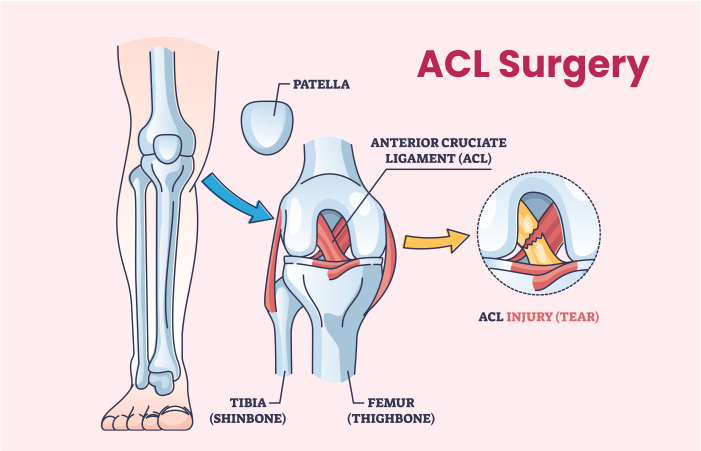
ACL Reconstruction
ACL reconstruction is a surgical procedure to repair a torn anterior cruciate ligament (ACL), a key ligament in the knee that provides stability. It involves replacing the damaged ligament with a graft, typically taken from the patient’s tendon or a donor. The surgery is minimally invasive, performed using arthroscopy under general or regional anesthesia. Recovery includes physical therapy and may take 6-9 months for full return to activities. ACL reconstruction restores knee stability and function, enabling patients to resume active lifestyles.
What is ACL Reconstruction Surgery?
ACL reconstruction surgery involves repairing or replacing a torn or ruptured ACL in the knee joint. The ACL is an important ligament that stabilizes the knee by limiting excessive forward movement of the tibia (shinbone) relative to the femur (thighbone). Arthroscopic ACL restoration is the preferred method because it allows for less intrusive surgery, faster recovery, and superior cosmetic outcomes.
Why is ACL Reconstruction
Surgery Performed?
ACL reconstruction surgery is done for numerous reasons:
- Restoring knee stability: The fundamental goal of ACL repair is to restore stability to the knee joint. This stability is essential for physical activity, sports, and avoiding future knee injuries.
- Resuming normal function: ACL tears frequently impede daily activities and athletic involvement. Reconstruction surgery seeks to help people return to their regular level of activity and regain knee function.
- Preventing long-term complications: Postponing or postponing ACL repair surgery can result in chronic knee instability, higher risk of further injury, and the development of secondary disorders such as meniscus tears or osteoarthritis.
How to Prepare for ACL Reconstruction treatment
To prepare for ACL surgery, follow the following general guidelines:
- Consultation with a specialist: Make an appointment with a top ACL reconstruction surgeon who is experienced and skilled in doing this treatment.
- Preoperative evaluations: Your surgeon may perform a comprehensive evaluation that includes a physical examination, imaging tests (such as an MRI), and a review of your medical history.
- Education and Informed Consent: Your surgeon will describe the operation, go over potential risks and advantages, and answer any questions or concerns you may have. Informed consent is a key step in the preparation process.
- Preoperative instructions: Follow any special advice given by your surgeon, such as fasting guidelines, medication adjustments, and lifestyle changes before to surgery.
More About ACL
Reconstruction Surgery:
Arthroscopic ACL reconstruction is normally done as an outpatient operation with general anesthesia. The surgeon creates small incisions and inserts an arthroscope (a thin tube with a camera) to examine the knee joint. The surgeon makes additional incisions to remove the injured ACL and replace it with a graft, which is typically sourced from your own body (autograft) or a donor. The transplant is fixed with screws, sutures, or other fixation techniques.
Following surgery, a complete rehabilitation program, including physical therapy, is needed. The goal of rehabilitation is to restore strength, flexibility, and stability to the knee joint, optimize healing, and allow for a safe return to regular activities and sports.
Consequences of Delaying ACL Reconstruction Surgery
Delaying ACL reconstruction surgery can have a variety of effects.
- Increased risk of additional injury: An untreated ACL tear exposes the knee to other problems, such as meniscal tears or cartilage damage.
- Persistent knee instability: Without surgical intervention, the knee may remain unstable, resulting in recurring episodes of giving way or buckling, which can have a severe impact on mobility and overall quality of life.
- Secondary Complications: Prolonged ACL deficit can lead to the development of long-term knee disorders such as meniscus tears, osteoarthritis, and persistent discomfort.
- Delayed return to sports and activities: Postponing surgery extends the healing period, making it difficult to resume sports or physically demanding activities within an acceptable timeframe.
Frequently Asked Questions (FAQs)
ACL reconstruction surgery is a surgical treatment that repairs a damaged ACL in the knee. The ACL is a key ligament that stabilizes the knee joint. To restore knee stability and function, the injured ACL is replaced with a graft, which is commonly derived from the patient's own tissue or donated tissue.
Arthroscopy, a minimally invasive method, is commonly used to do ACL repair surgery. Small incisions are created to implant a miniature camera and specialized surgical equipment into the knee joint. The surgeon removes the torn ACL and prepares the bone tunnels for the graft. The graft is subsequently positioned and held in place with screws or other fixation devices. The incisions are closed, and the knee is usually braced or immobilized after surgery.
The recovery process after ACL reconstruction surgery is a gradual and progressive journey. It incorporates a combination of rest, physical treatment, and rehabilitation exercises. Initially, weight-bearing and range-of-motion exercises are introduced, followed by strengthening exercises to reestablish muscular control and stability. The recuperation period varies according to individual conditions, but it usually takes several months to resume sports and other physical activity.
ACL repair surgery, like any other surgical technique, includes risks and problems. Infection, hemorrhage, blood clots, graft failure, reduced range of motion, stiffness, and re-injury are all potential complications. To reduce these risks and enhance the outcome, follow your surgeon's postoperative instructions, which include thorough rehabilitation and activity modification.
ACL reconstruction surgery is intended to restore knee stability and function following an ACL injury. While it considerably lowers the chance of re-injury, it does not provide total protection from future knee problems. To reduce the risk of future knee injuries, it is critical to follow a comprehensive rehabilitation program, strengthen the surrounding muscles, and perform suitable warm-up exercises before physical activity.