- +91 63054 35011
- info@medtx.in/operations@medtx.in
- HYD, TS

Coronary Artery Bypass Grafting
Coronary artery bypass grafting (CABG) is a surgical procedure to improve blood flow to the heart by bypassing blocked or narrowed coronary arteries. It involves using a healthy blood vessel, typically from the leg, arm, or chest, to create a new pathway for blood to reach the heart muscle. CABG is commonly performed to relieve chest pain, reduce heart attack risk, and improve overall heart function. Recovery can take several weeks, with cardiac rehabilitation aiding in regaining strength. The surgery is life-saving and enhances quality of life for those with severe coronary artery disease.

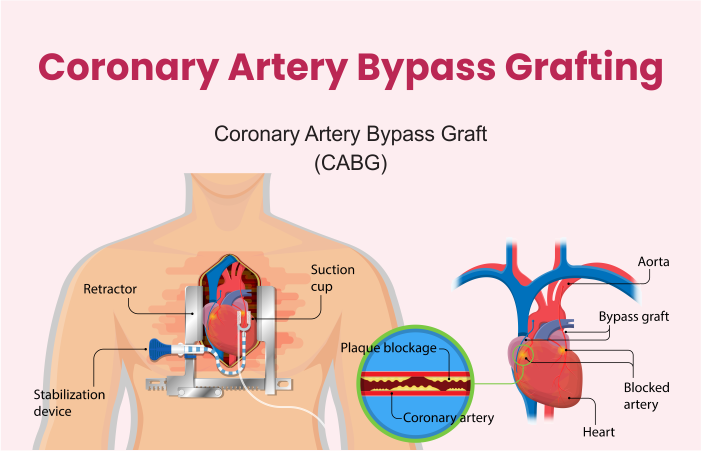
Coronary Artery Bypass Grafting
Coronary artery bypass grafting (CABG) is a surgical treatment that improves blood flow to the heart muscle by avoiding blocked or constricted coronary arteries. It entails transplanting healthy blood vessels, typically from the leg or chest, onto the heart to establish new paths for blood to bypass the blocked or restricted arteries. CABG surgery is performed at MedTX Hospitals in Hyderabad, and has a high success rate.
Why Is Coronary Artery Bypass Grafting (CABG) Performed?
CABG is performed for a variety of reasons.
- Coronary Artery Disease: It is widely used to treat severe coronary artery disease, in which blood flow to the heart is considerably reduced due to blockages or narrowing of the coronary arteries.
- Angina Relief: CABG can help reduce angina (chest pain) that is not well controlled by medication or other treatments.
- Heart Attack Prevention: It helps lower the risk of heart attacks by restoring normal blood flow to the heart muscle.
- Heart Failure: In some situations, CABG may be utilized to enhance heart function in those suffering from coronary artery disease.
- Cultural and Religious Reasons: Circumcision is practiced for cultural or religious reasons by numerous cultures around the world. It can be conducted as a rite of passage, a marker of identification, or to demonstrate religious views.
- Personal Preferences: Some people or parents choose circumcision for personal reasons like hygiene, social or aesthetic preferences, or to follow family traditions.
How to Prepare for Coronary Artery Bypass Grafting (CABG)
Preparing for CABG consists of various steps:
You will get a full medical checkup to assess your overall health, which will include blood tests, imaging scans, and cardiac exams.
Medication Management: Your healthcare team will assess your current medications and make any required changes prior to surgery.
Lifestyle Changes: Making lifestyle changes, such as stopping smoking, improving your nutrition, and increasing physical activity, may be recommended to improve surgical results.
Education and Counseling: You will learn about the procedure, the recuperation period, and any risks and complications. This is an opportunity to discuss any issues or questions you may have.
More About Coronary Artery Bypass Grafting (CABG)
CABG surgery involves making an incision in the chest, collecting a blood vessel graft (such as the saphenous vein or internal mammary artery), and linking it to the blocked or restricted coronary arteries to create new channels for blood flow.
Grafts can be of several forms, including single grafts (one artery bypassed) and numerous grafts.
Risks and issues: While CABG is generally safe, any surgical surgery carries risks including as bleeding, infection, blood clots, stroke, and anesthesia-related issues.
Recovery and Rehabilitation: Following surgery, you will spend time in the hospital recuperating before being released. Cardiac rehabilitation programs may be suggested to help you rebuild strength, control risk factors, and enhance a healthy lifestyle.
Consequences of Delaying Coronary Artery Bypass Grafting (CABG)
- Heart Disease Progression: Postponing CABG surgery can allow the underlying coronary artery disease to progress, potentially leading to more severe blockages, an increased risk of heart attack, and worsening symptoms.
- Reduced Quality of Life: If surgery is postponed, you may continue to experience uncontrolled chest discomfort, limited physical activity, and a general sense of unwellness, affecting your quality of life and everyday functioning.
- Increased issues: In some circumstances, delaying CABG surgery may raise the risks of the procedure due to heart disease progression or the development of other health issues.
Frequently Asked Questions (FAQs)
CABG surgery is a method for treating coronary artery disease. It entails developing new channels for blood flow to the heart by bypassing blocked or restricted coronary arteries with grafts (blood vessels) from other areas of the body.
CABG surgery is usually advised for people with severe coronary artery disease who have major blockages or narrowing in their coronary arteries. It may be advised for those suffering from angina (chest discomfort) that is not effectively controlled by medicine or other treatments, as well as those who are at high risk of having a heart attack.
Circumcision has been demonstrated to reduce the risk of urinary tract infections, particularly in babies.
Circumcision has been linked to a lower risk of developing some sexually transmitted diseases (STIs), including HIV.
Easier hygiene: By removing the foreskin, cleaning the penis becomes easier, thereby lowering the risk of infection and other complications.
It is crucial to remember that, while circumcision has some health benefits, the decision to have it done should be based on personal, cultural, or religious reasons.
- Weakness in the blood vessel wall: The walls of blood vessels in the brain might weaken with time, increasing their susceptibility to aneurysm formation.
- Genetic factors: There may be a family history of cerebral aneurysms, indicating a genetic component.
- High blood pressure: Uncontrolled high blood pressure puts strain on the blood vessel walls, increasing the risk of aneurysm formation and rupture.
- Smoking and substance abuse: Tobacco use and certain illicit drugs have been linked to an increased risk of cerebral aneurysm.
- Repetitive hand and wrist movements, particularly flexion and extension.
- Wrist injuries or fractures that disrupt the alignment of the carpal bones.
- Medical diseases include diabetes, rheumatoid arthritis, and hypothyroidism.
- Hormonal changes, such as those that happen during pregnancy.
- Anatomical considerations include a narrow carpal tunnel or a naturally smaller tunnel size.
CABG surgery is done under general anesthesia. To gain access to the heart, the surgeon creates a chest incision and grafts blood vessels, usually arteries or veins from the leg or chest, to bypass blocked or restricted coronary arteries. The grafts are linked to the coronary arteries, allowing blood to flow past the obstructions.
Following CABG surgery, patients are hospitalized for several days to a week and are intensively monitored. Pain management, medicine, and cardiac rehabilitation are all key aspects of the recovery process. Patients progressively resume physical activity and get post-operative care guidelines. Full recovery could take several weeks or months.
CABG surgery, like any other surgical treatment, involves risks and consequences. Infection, bleeding, blood clots, stroke, kidney issues, abnormal heart rhythms, and, in rare cases, a heart attack or death. Prior to surgery, your surgeon will go over any potential risks and consequences with you.