- +91 63054 35011
- info@medtx.in/operations@medtx.in
- HYD, TS

Hip Replacement Treatment
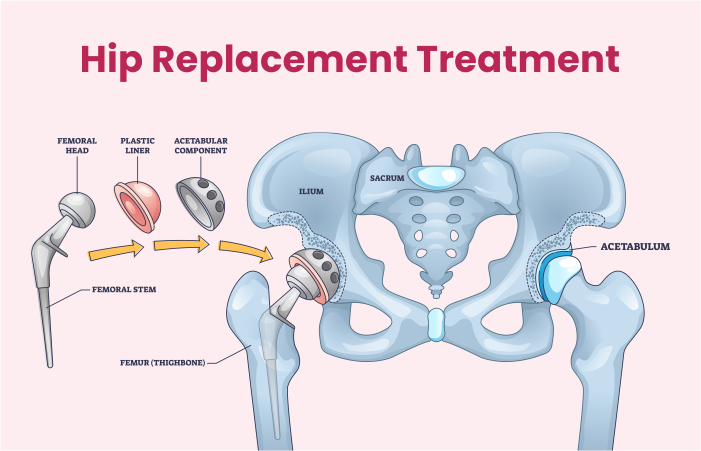
Hip replacement treatment is a surgical procedure to replace a damaged or worn-out hip joint with an artificial implant, usually due to arthritis, injury, or other joint disorders. It relieves pain, restores mobility, and improves quality of life. The procedure can be performed as total hip replacement or partial hip replacement, depending on the condition. Recovery involves physical therapy and can take a few weeks to months for full mobility. The surgery provides long-lasting relief and enhances daily function.

Hip Replacement
MedTXHospitals, Our team of highly skilled surgeons and medical specialists at the Best Hip Replacement Hospital in Hyderabad is committed to providing you with the best possible care and assisting you in regaining your mobility and quality of life.
What is Hip Replacement Treatment?
Hip replacement therapy, often known as hip surgery or complete joint replacement, is a surgical technique that replaces a broken or diseased hip joint with an artificial implant. This operation is often advised for those who have persistent hip discomfort, poor mobility, and a low quality of life as a result of illnesses like osteoarthritis, rheumatoid arthritis, hip fractures, or other hip-related traumas.
Why is Hip Replacement Treatment Performed?
Hip replacement therapy is used to relieve pain, restore joint function, and increase general mobility. This treatment, which involves replacing the damaged hip joint with an artificial implant, can give long-term relief and enhance the quality of life for people suffering from painful hip diseases.
How to Prepare for Hip Replacement Treatment?
There are a number of crucial measures involved in getting ready for hip replacement surgery. Our skilled group of hip replacement physicians in Hyderabad will help you every step of the way, guaranteeing a successful and easy treatment. Among the preparations could be:
- Medical Evaluation: To decide whether hip replacement is the best course of action for you, your doctor will perform a comprehensive examination and go over your medical history.
- Preoperative Tests: To evaluate your general health and spot any possible dangers, you might need to have a number of tests done before surgery, including blood tests, electrocardiograms (ECGs), and X-rays.
- Medication Review: Prior to surgery, your doctor will go over your existing prescriptions and advise you on which ones to keep taking or stop.
- Lifestyle Changes: You can maximize your surgery outcome and recovery by adopting specific lifestyle changes, such as decreasing weight, stopping smoking, and increasing your general level of physical fitness.
Consequences of Delaying Hip Replacement Treatment
Your quality of life may suffer significantly if you put off hip replacement surgery. Your pain and movement problems may worsen the longer you put off the surgery, making it more difficult for you to engage in your favorite pastimes and carry out daily tasks. Postponing treatment may result in:
- Increased Pain: Excruciating hip pain brought on by a failing joint can make it difficult to move, sleep, or even stand for extended periods of time.
- Restricted Mobility: Your range of motion gets limited as the hip joint continues to deteriorate, making it harder for you to move freely and engage in activities you used to enjoy.
- Functional Limitations: Postponing hip replacement surgery may result in a loss of independence and function, making it challenging to carry out daily duties and keep an active lifestyle.
- Degenerative Effects: Prolonged wear and tear on the hip joint might result in further issues and irreversible degeneration, which could make surgery more difficult and less likely to produce the best results.
- Stop allowing hip discomfort to rule your life. To arrange a consultation with our renowned team of hip replacement surgeons, get in touch with the Best Hip Replacement Center in Hyderabad right now. Our professionals will evaluate your condition, offer tailored treatment advice, and walk you through each stage of the hip replacement process. Regain your mobility and live life to the fullest with our exceptional hip replacement services.
Frequently Asked Questions (FAQs)
The complexity of the case and the surgeon's technique are two variables that can affect how long a hip replacement treatment takes. The actual procedure usually takes one to two hours on average.
Typically, hip replacement surgery is carried out under general anesthesia, which renders you unconscious and asleep throughout the process. Regional anesthesia, or a combination of regional and general anesthesia, may be used in certain situations to numb the surgical site while keeping you awake.
Each person has a different healing time following hip replacement surgery. Most patients should anticipate spending a few days in the hospital after the operation. Regaining full strength and mobility may take weeks to months, and physical therapy and rehabilitation will be crucial components of your recovery.
Hip replacement surgery has risks and potential complications, just like any other surgical treatment. These may include blood clots, infection, dislocation of the new hip joint, injury to blood vessels or nerves, implant failure or loosening, and anesthesia-related side effects. These dangers are uncommon, though, and your surgeon will take every safety measure to reduce them.
A hip replacement's lifespan can change based on a number of variables, including the patient's age, degree of activity, and implant type. However, with the right maintenance and frequent check-ups with your orthopedic surgeon, contemporary hip replacements are made to last for 15 to 20 years or even longer.