- +91 63054 35011
- info@medtx.in/operations@medtx.in
- HYD, TS

Knee Replacement Surgery
Knee replacement surgery is a procedure to replace a damaged or worn-out knee joint with an artificial implant, often due to arthritis or injury. It can be a total or partial knee replacement, depending on the severity of the damage. The surgery relieves pain, restores mobility, and improves the overall quality of life. Recovery involves physical therapy and can take several weeks to months for full function. This procedure offers long-lasting results, enabling patients to return to daily activities with ease.

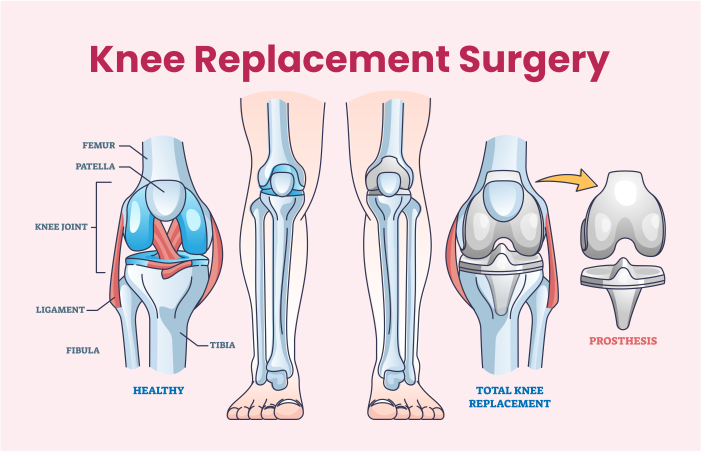
What is Knee Replacement?
Knee replacement, also known as knee arthroplasty, is a surgical operation that replaces a damaged or diseased knee joint with an artificial implant. It is a frequent operation for those who have severe knee pain, poor mobility, and a low quality of life owing to illnesses including osteoarthritis, rheumatoid arthritis, or traumatic traumas.
Why is Knee Replacement Performed?
- Pain Relief: Severe knee pain that does not respond to conventional therapies such drugs, physical therapy, or assistive devices can have a major impact on everyday life. Knee replacement is intended to treat persistent pain and enhance overall function.
- Improved Mobility: A injured knee joint can restrict movement, making it difficult to walk, climb stairs, or participate in daily activities. Knee replacement surgery improves mobility and the capacity to perform daily activities.
- Joint Stability: When a knee joint becomes unstable owing to ligament damage or severe arthritis, a knee replacement can give stability and support.
- Correction of Deformities: Knee replacement surgery can correct abnormalities like bent legs or knock knees by restoring proper alignment and function.
How to Prepare for Knee Replacement Surgery
Preparing for knee replacement surgery consists of various steps:
- Medical Evaluation: Your healthcare practitioner will examine your overall health, review your medical history, perform a physical examination, and may prescribe tests such as blood work, X-rays, or MRI scans to determine the status of your knee.
- Preoperative Planning: Prior to surgery, your healthcare team will give you thorough instructions on which drugs to avoid, dietary restrictions, and any lifestyle changes you need make. They may also suggest physical treatment to help strengthen the surrounding muscles.
- Education and Consent: Your healthcare professional will go over the surgical process, potential risks and complications, expected outcomes, and answer any questions or concerns you may have. Before proceeding with the surgery, informed consent will be requested.
More About Knee Replacement Surgery
- Surgical Technique: In knee replacement surgery, deteriorated joint surfaces are removed and replaced with artificial implants composed of metal, plastic, or a combination of the two. The treatment can be performed as a whole knee replacement, including all three compartments of the knee, or as a partial knee replacement, focusing on a single compartment.
- Anesthesia: Knee replacement surgery can be done with general anesthesia, regional anesthesia (spinal or epidural), or a combination of local anesthetic and sedation. The type of anesthesia used is determined by a variety of criteria, including patient preference and surgeon recommendations.
- Recovery and Rehabilitation: After the surgery, you will be taken to a recovery area before being transferred to your hospital room. Physical therapy and pain management techniques will be implemented to promote healing, restore strength, and improve range of motion. The length of the hospital stay and the duration of rehabilitation will vary depending on individual factors.
- Long-Term Outcomes: Knee replacement surgery has a high success rate in terms of pain alleviation and functional improvement. Most persons find a considerable reduction in knee discomfort, greater mobility, and an enhanced quality of life.
Consequences of Delaying Knee Replacement Surgery
- Increased Pain and Functional Limitations: Delaying knee replacement surgery can prolong the pain and functional limitations caused by a damaged knee joint, making daily activities difficult and lowering overall quality of life.
- Progressive Joint Damage: Conditions like osteoarthritis can worsen over time, resulting in further degeneration of the knee joint. Delaying surgery may result in increased joint damage, complicating the procedure and potentially limiting the effectiveness of the replacement.
- Compromised Quality of Life: Untreated knee pain and limitations can have a substantial impact on physical and mental well-being, reducing mobility, independence, and overall quality of life.
Frequently Asked Questions (FAQs)
Knee replacement surgery, also known as knee arthroplasty, is a surgical technique that involves replacing a damaged or diseased knee joint with a prosthesis consisting of metal, plastic, or a mix of the two.
Knee replacement surgery, also known as knee arthroplasty, is a surgical technique that involves replacing a damaged or diseased knee joint with a prosthesis consisting of metal, plastic, or a mix of the two.
The actual procedure normally takes between 1 and 2 hours. However, you will need to spend more time in the operation room to prepare and recover.
Knee replacement surgery can be conducted either under general anesthesia, which puts you entirely asleep, or under regional anesthesia, which makes you numb from the waist below. The type of anesthesia used will be determined by a variety of criteria and discussed with your physician.
Recovery duration varies by individual, but most people can resume mild activities within a few weeks and notice significant improvement within a few months. Full recuperation and return to normal activities can take months.