- +91 63054 35011
- info@medtx.in/operations@medtx.in
- HYD, TS

Trigger Finger Surgery
Trigger finger surgery is a procedure to release the narrowed tendon sheath causing the finger to lock or catch when bent. The surgery involves making a small incision in the palm to cut the sheath, allowing the tendon to glide smoothly. It is performed under local anesthesia and typically takes less than 30 minutes. Recovery is quick, with most patients resuming normal activities within a few weeks. The procedure effectively restores finger movement and eliminates pain.

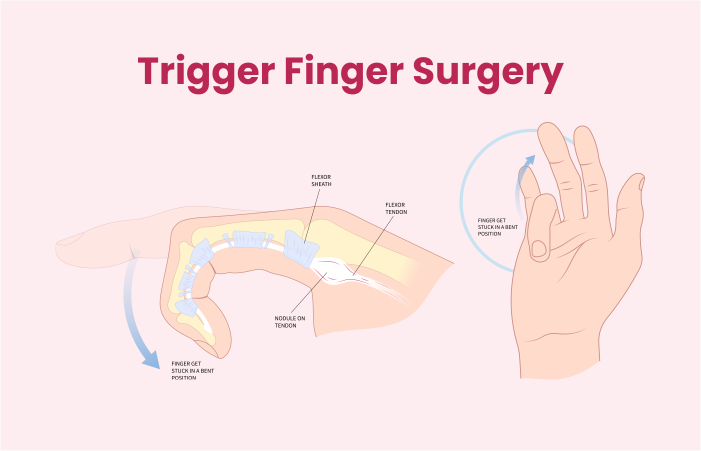
Trigger Finger Surgery
Welcome to MedTX Hospitals, the leading provider of trigger finger release surgery and comprehensive hand and wrist orthopedic care in Hyderabad. Our hospital is known for its superior medical competence and cutting-edge facilities, making it the first choice for patients looking for effective trigger finger therapy. With a team of highly qualified hand surgeons and orthopedic experts, we provide comprehensive care and ensure the best possible results. In this article, we will discuss trigger finger surgery, including its purpose, why it is conducted, how to prepare for the treatment, and the implications of postponing the surgery.
What is Trigger Finger Surgery?
Trigger finger surgery, also known as trigger finger release surgery, is a treatment used to cure stenosing tenosynovitis, or trigger finger. This disorder causes one or more fingers to become crooked and difficult to straighten. During surgery, the tight tunnel that surrounds the problematic tendon is loosened, allowing the tendon to glide smoothly and decreasing the sensation of catching and locking.
Why is Trigger Finger Surgery Performed?
Trigger finger surgery is used for a variety of purposes, including:
- Alleviating symptoms: Symptoms of trigger finger include pain, stiffness, and trouble moving the affected finger(s). Surgery is used to relieve the symptoms and restore normal hand function.
- Restoring hand functionality: In extreme cases of trigger finger, the finger(s) may become trapped in a bent position, limiting daily activities. Trigger finger surgery restores the affected finger’s normal range of motion and functionality.
How to Prepare for Trigger Finger Surgery?
A set of steps must be taken before trigger finger surgery to ensure a safe and satisfactory outcome. Here are some key parts of the preparatory process:
- Consultation and evaluation: You will meet with a hand surgeon or orthopedic expert at TX Hospitals who specializes in treating trigger fingers. They will assess your condition, go over your symptoms and medical history, and describe the surgery in detail.
- Medical evaluation: Your healthcare team at TX Hospitals will perform a thorough medical evaluation to assess your general health and detect any pre-existing disorders that may affect your surgery. Blood tests, radiological scans, and consultations with other specialists may be required as part of this review.
- Pre-operative instructions: You will be given detailed instructions on how to prepare for the surgery, such as fasting guidelines and any necessary medication modifications. To guarantee a smooth transaction, please carefully follow these directions.
More About Trigger Finger Surgery at MedTX Hospitals
At MedTX Hospitals, we are proud of our staff of highly competent hand surgeons and orthopedic doctors who specialize in trigger finger surgery. Our doctors have significant experience performing trigger finger release procedures, and they are assisted by a committed team of healthcare specialists. We prioritize patient safety and comfort by deploying cutting-edge medical technology and adhering to the highest levels of care.
Consequences of Delaying Trigger Finger Surgery
Delaying trigger finger surgery has various consequences, including:
- Continued pain and discomfort: Trigger finger can cause chronic pain, stiffness, and reduced hand functionality. Delaying surgery increases the length of these symptoms and can lower your quality of life.
- Progression of the condition: Without prompt treatment, trigger finger can worsen over time, resulting in increasing finger stiffness, trouble completing daily tasks, and serious consequences.
- Increased risk of complications: In some cases, trigger finger can result in permanent contractures or the creation of nodules in the affected finger(s). Delaying surgery raises the chance of such complications, which may necessitate additional treatment in the future.
Do not postpone your treatment any further. Contact MedTX Hospitals to schedule a consultation with one of our top hand surgeons and orthopedic experts. We are committed to providing you with the best possible care and helping you toward optimal hand health and functionality. Learn more about trigger finger surgery and get the best results at TX Hospitals, the go-to place for hand and wrist orthopedic care.
Choose MedTX Hospitals for Transcatheter Aortic Valve
Replacement Surgery
MedTX Hospitals is your reliable partner for Transcatheter Aortic Valve Replacement Surgery, ensuring superior care and successful outcomes. Our devoted team of cardiac doctors, cutting-edge technology, and patient-centered approach make us the ideal choice for TAVR surgery in Hyderabad.
Contact us today to set up a consultation and take the first step toward improving your cardiac health. Our team will give you the customized attention and complete care you need, resulting in a smooth and effective TAVR procedure. Experience MedTX Hospitals’ brilliance in Transcatheter Aortic Valve Replacement Surgery.
Frequently Asked Questions (FAQs)
Trigger finger surgery normally takes 15 to 30 minutes. It is normally done as an outpatient operation, which means you can return home the same day.
Common trigger finger symptoms include finger stiffness, a clicking or popping sensation while bending or straightening the finger, soreness or tenderness at the base of the affected finger, and trouble fully extending or flexing the finger.
Trigger finger surgery is typically performed with local anesthetic. The surgeon makes a tiny incision around the base of the affected finger to relieve the restricted tendon sheath. In some circumstances, the surgeon may remove the thickened or inflammatory tissue.
Trigger finger surgery is generally well tolerated, and any discomfort during the treatment is alleviated by local anesthetic. Following surgery, you may suffer discomfort, swelling, or tenderness in the operated finger, but this can be treated with pain medications and home remedies given by your doctor.
The recuperation time following trigger finger surgery varies by individual. Light activities can usually be resumed in a few days, followed by typical daily activities in a week or two. Physical therapy or hand exercises may be prescribed to aid with healing and regain finger mobility.
Trigger finger surgery, like any other surgical procedure, has some risks, such as infection, bleeding, nerve injury, stiffness, or the recurrence of trigger finger symptoms. However, these complications are uncommon, and your surgeon will take the necessary precautions to minimize them.
In certain situations, non-surgical treatments such as splinting, medication, or corticosteroid injections might alleviate trigger finger symptoms. If conservative therapy fail to resolve the issue, trigger finger surgery may be advised as a long-term solution.
Your surgeon will give you precise advice about how to prepare for trigger finger surgery. This could include fasting prior to the procedure, discontinuing certain medications, and arranging for someone to accompany you to and from the hospital. To guarantee a good procedure, carefully follow the directions.
Trigger finger surgery is highly effective in alleviating symptoms and restoring normal finger function. However, there is a slim probability of recurrence or prolonged symptoms in some cases. Before the procedure, your surgeon will discuss the expected outcomes as well as any potential dangers.